

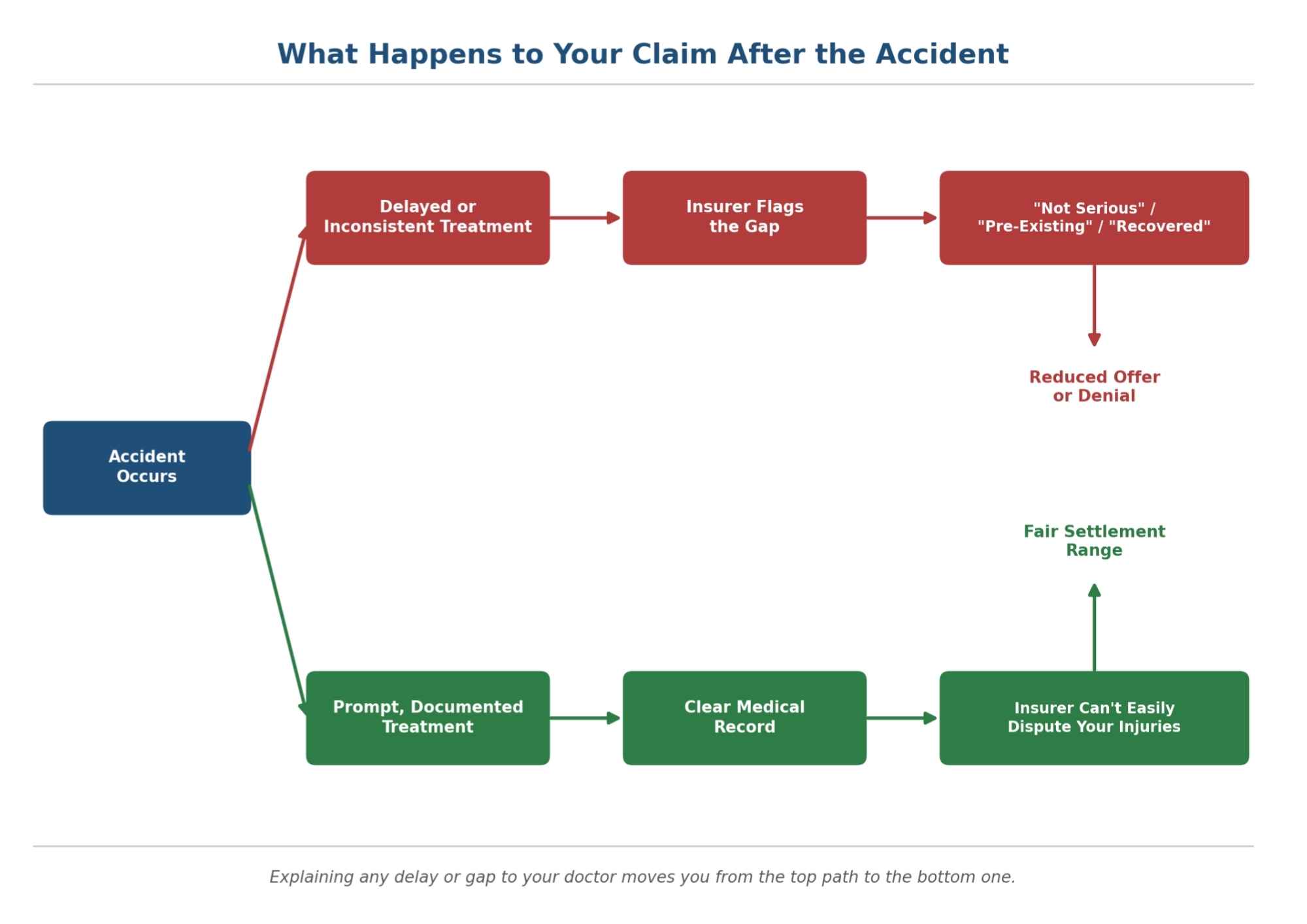
| Quick answer: If you didn’t see a doctor right away, you can still protect your claim, but don’t wait any longer. Insurers use any delay, at the start or between treatments, to argue your injuries weren’t serious, weren’t caused by the crash, or have already healed. See a doctor right away and explain the gap honestly. That’s what keeps insurers from telling the story for you. |
You walked away from the accident feeling shaken but not badly hurt, so you skipped the emergency room. A few days later, your neck won’t turn, your head won’t stop pounding, or your back has started aching in a way it never did before. Now you’re wondering if waiting cost you your case.
We hear concerns like this from people who didn’t realize how badly they were hurt until days after the accident. By the time they call our car accident lawyers in Alabama, they’re worried they’ve already given the insurance company a reason to deny their claim. A delay doesn’t automatically mean you’ve lost your case, but it does mean we need to understand what happened during that time.
Here’s what you need to know about treatment gaps, Alabama law, and the steps you can still take.
This article is for informational purposes only and does not constitute legal advice.
Why Insurance Companies Watch Your Treatment Timeline So Closely
Adrenaline can mask car accident injuries that aren’t immediately obvious, including symptoms of a concussion, a herniated disc, or whiplash. That’s the body’s response to trauma, not proof you weren’t hurt. But adjusters don’t see it that way. Whether you waited to see a doctor or paused treatment partway through, they’re looking for the same three openings: your injuries weren’t serious, something else caused them, or you have already recovered.
Alabama sets no fixed deadline for seeing a doctor, but the longer you wait, the more that gap gets used against you. Practically speaking, most firms grow reluctant to take a case once treatment starts more than a month out.
| Alabama Law Note
Under Alabama law, injured parties have a duty to limit or ‘mitigate damages’ by taking reasonable steps to get better. If an insurer convinces a jury you share any fault, even 1%, for how bad your injuries became because you delayed treatment, Alabama’s pure contributory negligence rule can bar you from recovering anything at all. |
Insurers especially love pointing to an old injury, a bad back, a prior whiplash, as the real cause of your pain. Alabama’s eggshell plaintiff rule doesn’t let them off that easily: the at-fault driver has to take you as they find you. Under Alabama Pattern Jury Instruction 11.13, the fact that someone was more susceptible to injury because of a pre-existing condition does not prevent recovery for the harm caused by the accident.
You don’t have to have been perfectly healthy before the crash to have a valid claim. What matters is whether the accident caused a new injury or made an existing condition worse. We’ll take your medical history seriously, look at what changed after the collision, and work to make sure an old diagnosis doesn’t overshadow the harm you’re dealing with now.
Delaying or Stopping Treatment Early Can Both Hurt Your Claim
Not seeing a doctor right after the crash is one problem. Stopping treatment partway through, missing appointments, or taking a break because you felt better or couldn’t afford another copay is another. Insurers lean on both the same way: as evidence you weren’t hurt as badly as you say, or that something else happened.
| Real-World Scenario: Foley
Marcus is rear-ended on Highway 59 in Foley and waits nine days before seeing a doctor. Treatment starts, then lapses for three weeks after he switches jobs. The insurer later points to both gaps: the first to argue his injuries were minor, the second to argue his pain came from the new job, not the crash. Because Marcus explained both delays to his doctor at the time, his medical record had already answered the argument. |
Valid Reasons People Delay Treatment, and Why They Still Matter
You’re not the first person to put off a doctor’s visit or miss a follow-up: symptoms that don’t show up for days, no health insurance, or work and childcare that make it hard to get away. For people in rural parts of Alabama, getting to a specialist may also mean a long drive and time away from work. These are all common reasons people delay or interrupt treatment. These are all common reasons people delay or interrupt treatment. Life doesn’t stop after a car accident, and we understand how frustrating it can be to juggle everyday responsibilities while dealing with an injury.
What matters is that your doctor hears them. Tell your doctor exactly when the accident happened, when symptoms started, and why you waited, so the reason ends up in your medical record instead of just in your memory. That record answers the insurance company’s argument later, not an explanation you come up with after the fact.
Not Sure If It’s Too Late to See a Doctor After Your Accident?
A delay in medical treatment doesn’t automatically mean you’ve lost your right to compensation. If you’re worried about how it might affect your Alabama car accident claim, give us a call. Tell us what happened, and we’ll help you understand your options. Your consultation is free, and there’s no obligation to hire us.
How Caldwell Wenzel and Asthana Personal Injury Lawyers Can Help
Getting treatment after a car accident shouldn’t depend on whether you can afford it or have a way to get to your appointments. At Caldwell Wenzel and Asthana Personal Injury Lawyers, we understand these challenges, and we have resources to help you overcome them.
If you don’t have health insurance or can’t afford your copays or other treatment costs, we work with medical funding companies that may cover eligible expenses while your case is ongoing. This can help you get the care you need without paying upfront, with repayment generally deferred until your case resolves, subject to the funding agreement.
If transportation is the problem, we can also help arrange rides to medical appointments through a third-party service. That way, getting to your doctor doesn’t have to become another obstacle to your recovery or another unexplained gap in your treatment history.
Whatever is keeping you from getting the treatment you need, tell us. We’ll look at the resources available and do what we can to help you get back on track.
★★★★★
“Caldwell Wenzel and Asthana Personal Injury Lawyers has exceptional customer service and is very knowledgeable about auto accidents. I give a 10/10 and recommend this firm to everyone.” – Brandy W.
What to Do Right Now if You Delayed Medical Treatment After a Car Accident
Even if days or weeks have passed since your accident, there are still steps you can take to protect your health and strengthen the evidence supporting your Alabama car accident claim:
- Get evaluated as soon as possible. Tell your doctor about the crash, your symptoms, and when they first appeared.
- Don’t let treatment costs stop you from asking for help. If insurance coverage or medical bills are an obstacle, contact us to discuss whether medical funding options may be available.
- Tell us if transportation is a problem. We may be able to help arrange rides to your medical appointments through a third-party service.
- Explain any gaps in treatment. Tell your doctor why you delayed care or missed an appointment so the reasons can be documented in your medical records.
- Keep your follow-up appointments. Follow your doctor’s recommendations and discuss any difficulties continuing treatment rather than stopping without explanation.
- Be careful with insurance statements. Before giving a recorded statement to the other driver’s insurance company, consider speaking with an attorney. Our guide explains how to talk to an insurance company after a car accident and what to watch out for.
Taking these steps now can make a meaningful difference. You can’t change when you first sought treatment, but you can get the care you need, make sure your medical history is accurately documented, and give your car accident attorney more evidence to work with.
Don’t Let a Delay in Treatment Keep You From Getting Legal Help
You may have waited to see a doctor, but that doesn’t mean you’ve waited too long to speak with a lawyer. At Caldwell Wenzel and Asthana Personal Injury Lawyers, we’ll review your accident, your medical history, and any gaps in treatment to help you understand where your claim stands and what you can do next.
With offices in Foley, Mobile, and Birmingham, we help injured people throughout Alabama. Can’t come to us? We offer virtual consultations and can arrange to meet you at home or in the hospital.
Your first consultation is free, and there’s no obligation to hire us. Give us a call and tell us what happened. We’ll take it from there.
Frequently Asked Questions
Below, our car accident lawyers answer some of the questions we hear most often from clients in Alabama.
Is there a deadline to see a doctor after a car accident in Alabama?
Alabama doesn’t set a fixed legal deadline, but the longer you wait, the more an insurer will use it against you. Most firms grow reluctant to take a case once treatment starts more than a month out.
What is Alabama’s contributory negligence rule, and how does it affect a delayed-treatment case
Alabama follows pure contributory negligence, one of the strictest fault rules in the country. If an insurance company convinces a jury you’re even 1% at fault, including for delaying or interrupting treatment, you can be barred from recovering anything at all, not just a reduced amount. That’s why explaining any gap to your doctor, and talking to an attorney early, matters more in Alabama than it would almost anywhere else.
Can I go to urgent care instead of the emergency room after a car accident in Alabama?
Yes. You don’t have to go to the ER for every injury. If your symptoms aren’t severe, an urgent care clinic or your regular doctor may be able to evaluate you and recommend treatment. What matters is getting the right medical attention for your condition, even if a few days have passed since the crash. Of course, serious symptoms like confusion, difficulty breathing, or a severe headache call for emergency care, not a routine appointment.
Who pays my medical bills while my Alabama car accident claim is pending?
You may have more options than you think. Your health insurance or Medical Payments (MedPay) coverage, if you have it, may cover some of your bills while your claim is pending. Depending on your situation, medical funding or payment arrangements may also be available. Just remember that some of these arrangements come with repayment obligations after a verdict or settlement. At Caldwell Wenzel and Asthana Personal Injury Lawyers, we’ll help you understand who may be responsible for your medical bills after an Alabama car accident and what you’re agreeing to before the bills start adding up.
Can the insurance company access my medical history after an Alabama car accident?
They can request your records, especially if you’ve had similar injuries before, but that doesn’t mean you have to give them unlimited access to your medical history. Be careful about signing a blanket medical authorization from the other driver’s insurer. Our car accident lawyers can review what they’re asking for and help you understand which records are relevant to your claim. If your case goes to court, additional medical information may need to be disclosed through the legal process.