

$2,000,000 Jury Verdict for a Pedestrian Struck in Foley, Alabama
Publish Date : 02 November 2026
Note: We have changed our client’s name in this case study to protect her privacy.
Joan was 69, retired, and accustomed to walking about a mile through her neighborhood most days. In October 2021, she parked at a gas station in Foley and started walking toward the store. A tractor-trailer fuel tanker was unloading directly across her path, forcing her to walk around it and creating a blind spot between her and traffic leaving the pumps.
A driver pulling out of the fuel area struck her, shattering her left shin and damaging her knee. The highest combined pretrial offer from the three defendants was $60,000. In August 2026, a Baldwin County jury returned a $2,000,000 verdict.
 40+ years of combined legal experience
 Free & confidential case evaluations
 Home or hospital visits available
Proven Results
Our Record-Setting Verdicts and Settlements
$10M+
Civil Litigation
Settlement involving civil litigation in Alabama
$10M+
Personal Injury
Settlement involving a workplace injury
$8M+
Medical Malpractice
Jury verdict in medical malpractice against OB/GYN in wrongful death of an infant

From a $60,000 Pretrial Offer to a $2 Million Jury Verdict
In October 2021, Joan parked in the lot west of the gas station, where the available spaces for customers who were not purchasing fuel were located. She began walking toward the store.
A tractor-trailer tanker was parked between that lot and the store, unloading fuel into the station’s underground tanks. The truck blocked Joan’s walking path and created a blind spot between her and vehicles leaving the pumps.
As Joan came around the truck, an SUV pulled out from the pump area, turned around the front of the tanker, and struck her.
Joan later sued the driver, the gas station owner, and the trucking company delivering the fuel. The gas station and trucking company disputed liability, while the driver’s insurer defended him at trial.
The highest combined offer extended by the three defendants before trial was $60,000.
Attorneys C. Randall Caldwell, Jr., Derek C. S. Rose, and J. Daniel Rhames took the case to trial in Baldwin County. On August 20, 2026, the jury awarded Joan $2,000,000.
How the Pedestrian
Collision Happened
At about 8:50 a.m., Joan was walking from her car toward the store when she reached the fuel tanker parked between the pumps and the entrance, unloading into the station’s underground tanks. She had to walk around it to reach the door.
On the other side, a driver pulled out from a pump station, turned around the front of the tanker, and struck her. He told the responding Foley police officer that the fuel truck had blocked his view of Joan. No citation was issued.
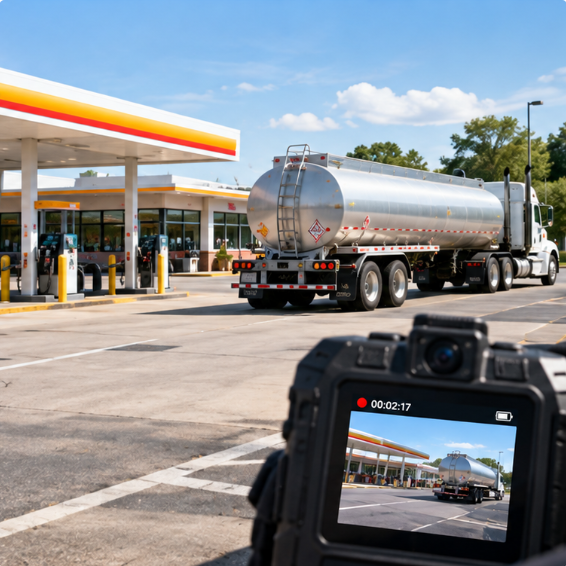
The fuel tanker itself became a central dispute. Its driver’s delivery ticket showed that he had finished unloading at 8:40 a.m., ten minutes before the collision, and he testified at trial that he had already left the site. Body camera footage from the responding officer later challenged that account.
A Shin Broken Into Fifteen Pieces, Rebuilt With a Titanium Rod

The collision left Joan with a severely comminuted fracture of her left tibia, broken into roughly fifteen pieces. The fracture extended into both sides of the tibial plateau, the upper surface of the shin bone that forms the bottom of the knee joint. She also fractured the upper part of her fibula and suffered bleeding into the knee. Imaging found no other acute injuries.
She underwent surgery the same day. A titanium rod was placed through the length of her shin bone from just below the knee to the ankle, and the knee joint surface was reconstructed with a plate and screws.
After three days in the hospital, Joan recovered at home for roughly three months. Her care included sixteen home physical therapy visits, occupational therapy, and home health aide visits. She wore a hinged knee brace limited to ninety degrees of bend for six weeks, and her weight bearing remained restricted until late December 2021 before progressing to full.
Both fractures eventually healed and the reconstructed joint surface held, but Joan’s knee now bends to roughly one hundred degrees rather than fully. Her thigh strength was measured at 4 out of 5, and she developed ankle pain during recovery.
Her retained orthopedic surgeon determined that she had reached maximum medical improvement and assigned a 20 percent permanent impairment to her left leg, equivalent to 8 percent of the whole person under the AMA Guides, Sixth Edition. He placed her at light work capacity with permanent limitations involving walking, crouching, squatting, kneeling, and climbing stairs and ladders.


Three Defendants,
Three Different Defenses
The driver acknowledged at the scene that he had not seen Joan, although he attributed the obstruction to the tanker. The gas station and trucking company disputed liability through trial. The trucking company’s position was that its truck had already left the property before the collision occurred.
Alabama’s contributory negligence rule created a significant risk in the case. If the jury assigned Joan any share of fault, however small, she could recover nothing. The defense could argue that she chose to walk around the parked tanker into an active lane of travel, so that potential exposure had to be addressed throughout the case.
The driver himself did not appear at trial. His insurer’s attorney defended him in his absence, leaving the other defendants able to point toward him as another potential source of responsibility.
The Site-Design Case, and the Body Camera the Defense Didn’t Know About
The firm retained a traffic engineer to analyze the property rather than reconstruct the collision itself. He found no marked crosswalk, pedestrian warning signs, or other measures directing customers between the parking area and store entrance. He also concluded that bollards pushed tankers farther into the lot, worsening the blind spot, while the fuel hauler blocked off its work area without providing an alternate pedestrian route or warning to drivers.
The analysis relied on the station’s site plan, corporate deposition testimony, and photographs of the property. An orthopedic surgeon separately addressed medical causation, treatment, and permanent impairment.
The key trial evidence came from the responding officer’s body camera. The trucking company’s driver testified that he had already left and would never have driven away from an injured woman. The footage showed Joan on the ground while the fuel tanker was still leaving the scene, directly challenging that testimony before the jury.
The most they ever offered her, all three defendants combined, was sixty thousand dollars. She was sixty-nine years old with a shin broken into fifteen pieces and a titanium rod running from her knee to her ankle. Sixty thousand. We knew that wasn’t justice, so we took the case to trial. The jury came back with a $2 million verdict.

C. Randall Caldwell, Jr.

Why $60,000 Wasn’t
a Settlement
Contributory negligence gave the defendants a potential complete defense rather than merely reducing Joan’s recovery. The driver carried only $25,000 in liability coverage, while the defendants with greater financial exposure could point toward him and toward one another.
The crash report also categorized Joan’s injury as a suspected minor injury, even though she underwent surgery the same day.
The highest combined offer from all three defendants before trial was $60,000. The case did not resolve on those terms and proceeded to trial.

The Verdict: $2,000,000
In August 2026, a Baldwin County jury returned a verdict of $2,000,000, approximately four years and ten months after the collision.
The verdict followed a case in which the highest combined pretrial offer from the three defendants was $60,000.
I never imagined a trip to get gas would change my life. The pain, the surgery, months of not knowing if I’d walk normally again… it was overwhelming. What kept me going was knowing Randall and his team were fighting just as hard as I was. When the jury came back, it felt like someone finally said out loud that what happened to me mattered. I’m so grateful I trusted Randall Caldwell and didn’t settle for less than the truth.
Joan,
Caldwell Wenzel and Asthana Personal Injury Lawyers client
What This Case Says About Our Approach
Our pedestrian accident lawyers in Foley approach cases like Joan’s by asking a broader question than who made contact with the pedestrian. Here, the real liability picture also involved how the property was configured, where the tanker was positioned, what the fuel hauler was doing, and whether those conditions helped create the danger that led to the collision.
Responsibility is rarely limited to the person behind the wheel.
The driver’s conduct mattered, but so did the layout of the property and the fuel hauler’s role in creating the conditions around the collision.
Objective evidence carries more weight than competing stories.
Site plans, photographs, corporate testimony, and body-camera footage gave the jury evidence it could evaluate for itself.
Potential defenses have to shape the case from the beginning.
Alabama’s contributory negligence rule meant any fault assigned to Joan could have eliminated her recovery entirely.
Some cases only gain leverage when they are genuinely ready for trial.
The defendants’ highest combined pretrial offer was $60,000. The jury ultimately returned a $2,000,000 verdict.
This was not a case built around a single piece of evidence or a single defendant. It required developing several liability theories at once and being prepared to let a jury decide them.


Explore Our Other Case Studies
Caldwell Wenzel and Asthana Personal Injury Lawyers represents injury victims across Alabama, Mississippi, and Florida. Take a look at our other case studies to see how we’ve helped clients pursue compensation after serious injuries.
$575,000
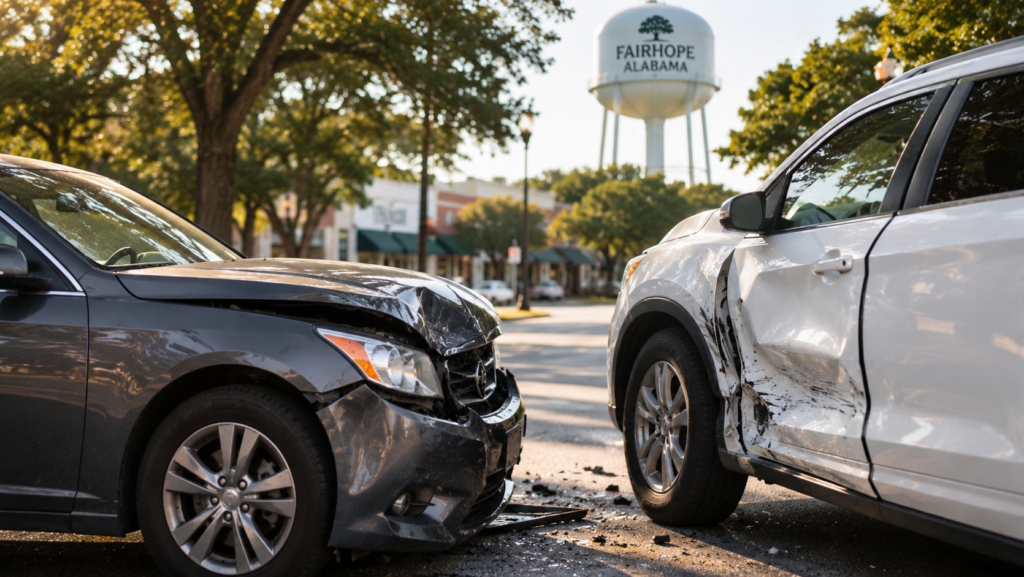
Settlement After a Fairhope Rear-End Collision
After a serious rear-end crash led to two surgeries and a disputed insurance coverage issue, Caldwell Wenzel and Asthana Personal Injury Lawyers helped secure a $575,000 settlement for the injured client.
Read case study
$177,127.58
Settlement After a Fairhope Left-Turn Collision
A left-turn crash caused a concussion, spine injuries, and a torn meniscus. The case ultimately recovered $177,127.58 through the at-fault driver’s coverage and the client’s own underinsured motorist policy.
Read case studyTalk to Caldwell Wenzel and Asthana Personal Injury Lawyers About Your Case
If you were injured as a pedestrian and multiple parties may share responsibility for what happened, our pedestrian accident lawyers in Alabama can review the circumstances of your case and explain your options.