

$575,000 Rear-End Collision Settlement in Fairhope, Alabama
Publish Date : 02 November 2026
Note: We have changed our client’s name in this case study to protect her privacy.
Sarah was a 28-year-old who worked a demanding job that kept her on her feet for most of every shift when a rear-end collision on Fairhope Avenue changed everything. What followed wasn’t a fight over who caused the crash; it was a fight over whether there was enough insurance in place to pay for what it cost her. Caldwell Wenzel & Asthana Personal Injury Lawyers took on that fight.
 121 years+ of combined trial experience
 Free & confidential case evaluations
 Home or hospital visits available
Proven Results
Our Record-Setting Verdicts and Settlements
$10M+
Civil Litigation
Settlement involving civil litigation in Alabama
$10M+
Personal Injury
Settlement involving a workplace injury
$8M+
Medical Malpractice
Jury verdict in medical malpractice against OB/GYN in wrongful death of an infant
A Rear-End Collision That Turned Into a Fight Over Insurance Coverage
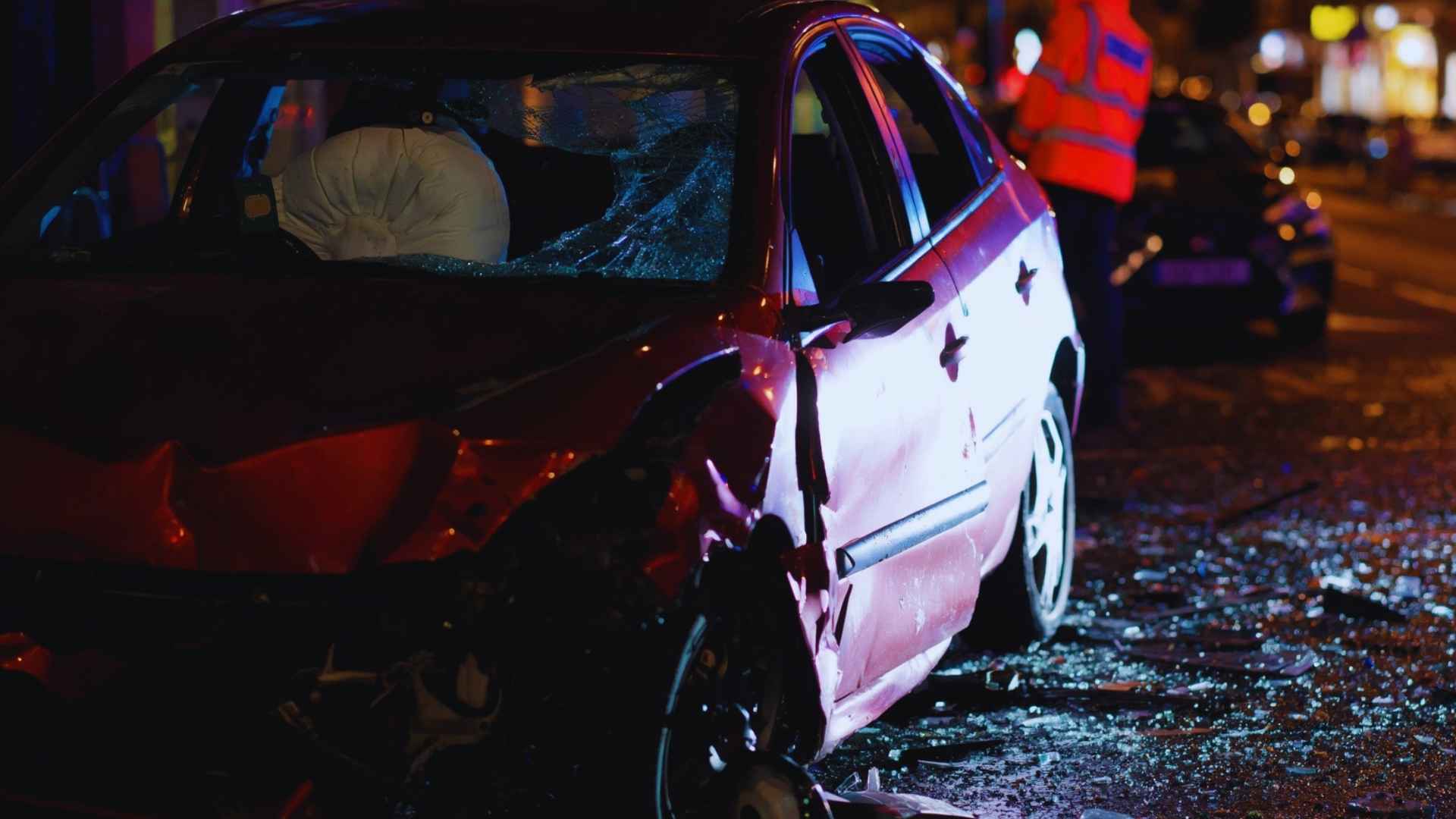
In July 2023, Sarah was stopped in traffic on Fairhope Avenue in Fairhope, Alabama (Baldwin County) when she was rear-ended at high speed and pushed into the vehicle stopped ahead of her. The collision led to lumbar spine surgery, right hip surgery, and a life-threatening post-surgical blood clot.
Liability was never seriously contested. The real obstacle was insurance: the at-fault driver was operating a vehicle he didn’t own, and the umbrella policy that represented the meaningful coverage in the case was challenged. Attorney Randall Caldwell overcame that coverage problem, and the case was resolved at mediation for $575,000, against an initial offer of $100,000.

How the Crash Happened
On the afternoon of the accident, a lead vehicle was stopped on Fairhope Avenue at Bishop Road, waiting for oncoming traffic to clear so it could turn left onto a private lane. Sarah was stopped directly behind it. The at-fault driver came up behind her without slowing down. She saw him in her rearview mirror, realized he wasn’t going to stop, and tried to get out of the way, but there was nowhere to go. He struck the rear of her car at high speed and drove it forward into the stopped vehicle ahead of her.
Her vehicle sustained major, disabling damage, was towed from the scene, and was declared a total loss. She reported her injuries to the investigating officer, was evaluated by a medical unit at the scene, and was in the emergency department within hours.
A police report was filed. The Alabama Uniform Traffic Crash Report placed the primary contributing circumstance on the rear vehicle, coded as misjudging stopping distance, and confirmed that the at-fault vehicle was registered to an owner other than the driver, a detail that became central to the case. Fault was never seriously disputed; what was contested was insurance coverage.
Liability Wasn’t in Question. Coverage Was.

The at-fault driver was operating a car owned by an elderly woman who carried an umbrella policy on the vehicle. That umbrella represented the meaningful coverage in the case, and a challenge was threatened over whether it reached the driver at all. Without it, Sarah’s recovery would have been capped at a fraction of what her injuries were worth.
Alabama also applies pure contributory negligence, one of a small number of states where any fault at all on an injured person’s part bars recovery entirely. Because Sarah was fully stopped with nowhere to go, that defense wasn’t available to the other side, and no fault was ever allocated to her.
Alabama has no general owner’s-liability statute that automatically makes a vehicle’s owner responsible for a permissive user’s negligence, which is part of why reaching the vehicle owner required a different legal theory (see below). A hospital lien was also perfected in Baldwin County Probate Court about five weeks after the collision, under Alabama’s hospital lien statute.


Building the Case: Two Problems, Two Solutions
Attorney Randall Caldwell pursued two separate legal paths to reach the insurance coverage that mattered. First, the firm established that the umbrella policy covered the at-fault driver as a permissive driver of the vehicle. Second, and independently, the complaint was amended to add the vehicle’s owner as a defendant, alleging that the driver was her employee acting within the line and scope of his employment, a theory that would make her vicariously liable and bring her own umbrella coverage into play as the named insured. The case settled at mediation before either theory was decided by a court, with both still active.
On the damages side, the key evidence was a report from a retained, board-certified orthopedic surgeon (retired from private practice in 2019, now an Orthopedic Medical Consultant for the Alabama Disability Determination Service). He reviewed 581 pages of medical records and billing and concluded that the collision caused injury to Sarah’s cervical spine, chest, lumbar spine, and right hip, that both surgeries and the resulting blood clot flowed from that trauma, and that she had sustained an 11% combined permanent whole-person impairment. His report was dated January 2026, in the run-up to mediation.
That opinion was supported by the crash report, same-day emergency department records, a two-year imaging progression and Sarah’s employer’s written job requirements alongside her wage and paid-time-off records. No accident reconstruction was performed, and no additional experts, such as an economist, life care planner, or vocational expert, were used.
Our client was 28, on her feet all day for work, and she did everything right. She went to every appointment, she pushed through two surgeries and a blood clot that could have killed her, and she never stopped showing up for her recovery. Our job was to make sure the insurance company couldn't hide behind a coverage technicality while she carried all of that.
C. Randall Caldwell, Jr.

From a $100,000 Opening Offer to a $575,000 Settlement
The case opened at $100,000. That number reflected the coverage posture at the time: with a threatened challenge to whether the umbrella policy reached the at-fault driver, the defense was valuing its exposure against the underlying auto policy alone, not the umbrella that ultimately funded the settlement.
Once Attorney Randall Caldwell established permissive-driver coverage and added the vehicle owner as a defendant on a vicarious-liability theory, the case was no longer capped where the defense had priced it. From there, negotiations were shaped by several factors: liability that was effectively uncontestable in a contributory negligence state, two objectively documented surgeries after extensive failed conservative treatment, a life-threatening post-surgical complication with lasting effects, a retained orthopedic expert, Sarah’s age of 28 in a physically demanding, standing job, $126,318 in billed medical treatment, roughly 706 hours of missed work for treatment and recovery, and two years of consistent treatment compliance that foreclosed any failure-to-mitigate argument.
The retained medical expert’s report, completed in January 2026, supplied the damages proof heading into mediation. The case was resolved there in June 2026, a 5.75-times increase over the opening offer. Once the coverage question was resolved in Sarah’s favor and the medical proof was documented, settling secured a certain recovery without the delay and risk of a trial, for a client who was three years removed from the collision and had already finished treatment.

The Settlement: $575,000, with $305,000 to Sarah
The case was resolved at mediation for a gross settlement of $575,000, roughly 4.6 times Sarah’s total billed medical specials of $126,318.
Hospital bills and health insurance subrogation claims against the settlement totaled $63,713.72. Attorney Randall Caldwell negotiated that down by $25,730.72, roughly 40%, with the reduction going directly to Sarah rather than to lienholders. The amount actually paid to resolve medical claims came to $37,983, which included an $11,680 health insurance subrogation component.
After liens and fees, Sarah’s net recovery was $305,000. The settlement funds were paid on June 18, 2026, within about three weeks of the case resolving at mediation.
What This Case Says About Our Approach
This case reflects several hallmarks of how Alabama personal injury lawyers at Caldwell Wenzel & Asthana Personal Injury Lawyers approach auto accident claims with complicated insurance coverage:

Separating coverage from damages
Treating the insurance coverage question as its own legal problem, distinct from proving the extent of the injuries.

Pursuing more than one path to coverage
Establishing permissive-driver coverage and independently pleading a vicarious-liability theory against the vehicle owner, so the case didn’t depend on a single legal theory succeeding.

Building damages around one well-prepared expert
A single retained orthopedic surgeon’s review of 581 pages of records supported causation, treatment reasonableness, and permanent impairment, without needing additional experts.
Using Alabama law to close off weak defenses
Sarah being fully stopped with nowhere to go removed any contributory negligence argument in a state where any plaintiff fault bars recovery entirely.
Negotiating lien reductions that benefit the client
The $25,730.72 reduction in medical liens went to Sarah, not to lienholders.
Together, these elements moved the case from a $100,000 opening offer to a $575,000 settlement, and secured a net recovery of $305,000 for Sarah.









Explore Our Other Case Studies
Caldwell Wenzel & Asthana Personal Injury Lawyers represent injury victims across Alabama, Mississippi, and Florida, handling car, truck, and motorcycle accident claims, premises liability and slip and fall cases, wrongful death claims, and other personal injury and mass tort matters. Take a look at our other case studies to see how we’ve helped injured clients recover the compensation they deserved.
$177,127.58
Settlement After a Fairhope Left-Turn Collision
A left-turn crash caused a concussion, spine injuries, and a torn meniscus. The case ultimately recovered $177,127.58 through the at-fault driver’s coverage and the client’s own underinsured motorist policy.
Read case study
$325,000
$325,000 Recovered After a Red-Light Collision in Gulf Shores, Alabama
A red-light collision left our client with multiple hip and pelvic fractures. Our car accident attorneys recovered $325,000 from two sources of insurance.
Read case studyTalk to Caldwell Wenzel & Asthana Personal Injury Lawyers About Your Case
If you’ve been in an accident and aren’t sure whether there’s enough insurance in place to cover what happened, you’re not alone. Coverage questions can be just as complicated as the injuries themselves. A free consultation with one of our car accident lawyers in Alabama can help you understand what options are available in your case.